
One of the most common tests a child receives after being diagnosed with Kawasaki Disease is an echocardiogram. An echocardiogram along with an electrocardiogram (EKG or ECG), are tests that doctors use to determine heart health. Although both are very important, this post will mainly be about echocardiograms.
Firstly, an echocardiogram is a test that uses ultrasound waves to create moving images of the heart. It is a non invasive treatment and is completely painless to the patient. During the test, a technician places a small amount of gel on the patient’s chest and moves a handheld probe, called a transducer, over the area. The probe sends out and receives sound waves that the computer uses to create detailed images of the heart. This test usually takes around 20 to 45 minutes depending on the patient, but it requires the patient to stay still to take clear accurate pictures of the heart, which can be troublesome, especially with younger patients (heart.org).
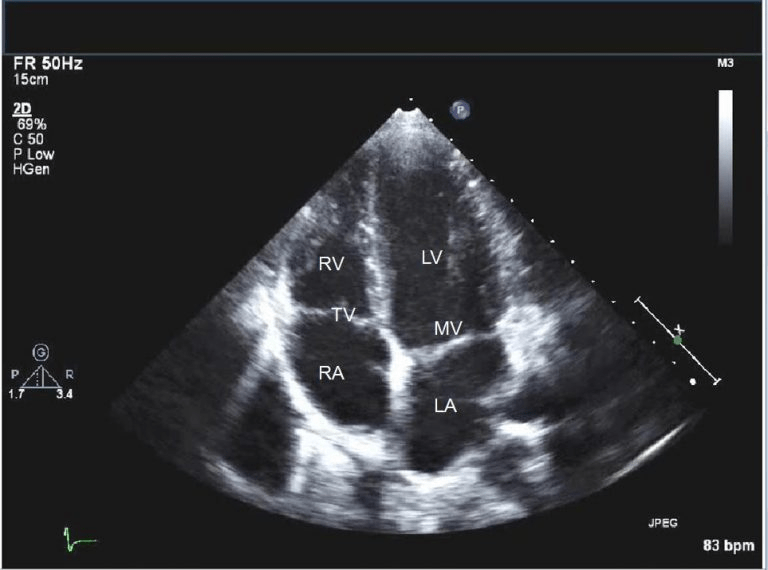
Image from (https://mvpctr.com/echocardiogram/)
Kawasaki patients need this test because the disease inflames the coronary arteries. By using an echocardiogram, doctors can see how inflamed these arteries are and make decisions based on the results of the test. By observing an echocardiogram, doctors can see coronary artery enlargement, aneurysms, heart muscle function, fluid around the heart, and other heart problems.
When looking at this test, most doctors are looking mainly at the coronary arteries. They want to determine if they look normal or enlarged, and whether aneurysms are forming or not. Additionally, they want to make sure the heart is functioning as normal. For example, if the heart is pumping blood normally or if the values in the heart are working as they should (AHAjournals).
To interpret the results of this tests, doctors compare the child’s coronary arteries to those expected of healthy children with a similar body size. Doctors can’t just measure the artery diameter because each child grows at a different rate and has a slightly different body size. Instead, doctors assign a z score, or a number to show how many standard deviations larger or smaller a child’s arteries are compared to the expected measurements of a healthy child. As the z score increases, the coronary arteries are considered progressively more enlarged, where a higher z score corresponds to larger aneurysms and potentially greater risk of heart complications.
Echocardiograms are performed almost every time a patient goes in for a checkup for Kawasaki disease. Doctors usually perform them at the diagnosis, the subsequent checkups to determine whether the disease has healed or not, and even the checkups as the child grows up. This way, doctors can keep track of the patient’s hearth health, making sure that there are no abnormalities or recurrences of Kawasaki Disease, and prescribe early treatment if any abnormalities are found (heart.org).
Echocardiograms are one of the most important tools in treating, diagnosing, and monitoring Kawasaki Disease. As someone who has had many echocardiogram tests performed on him, they are not something to be scared of and its kind of cool to see your heart on the screen of the echocardiogram after a while.


Leave a Reply